How it works
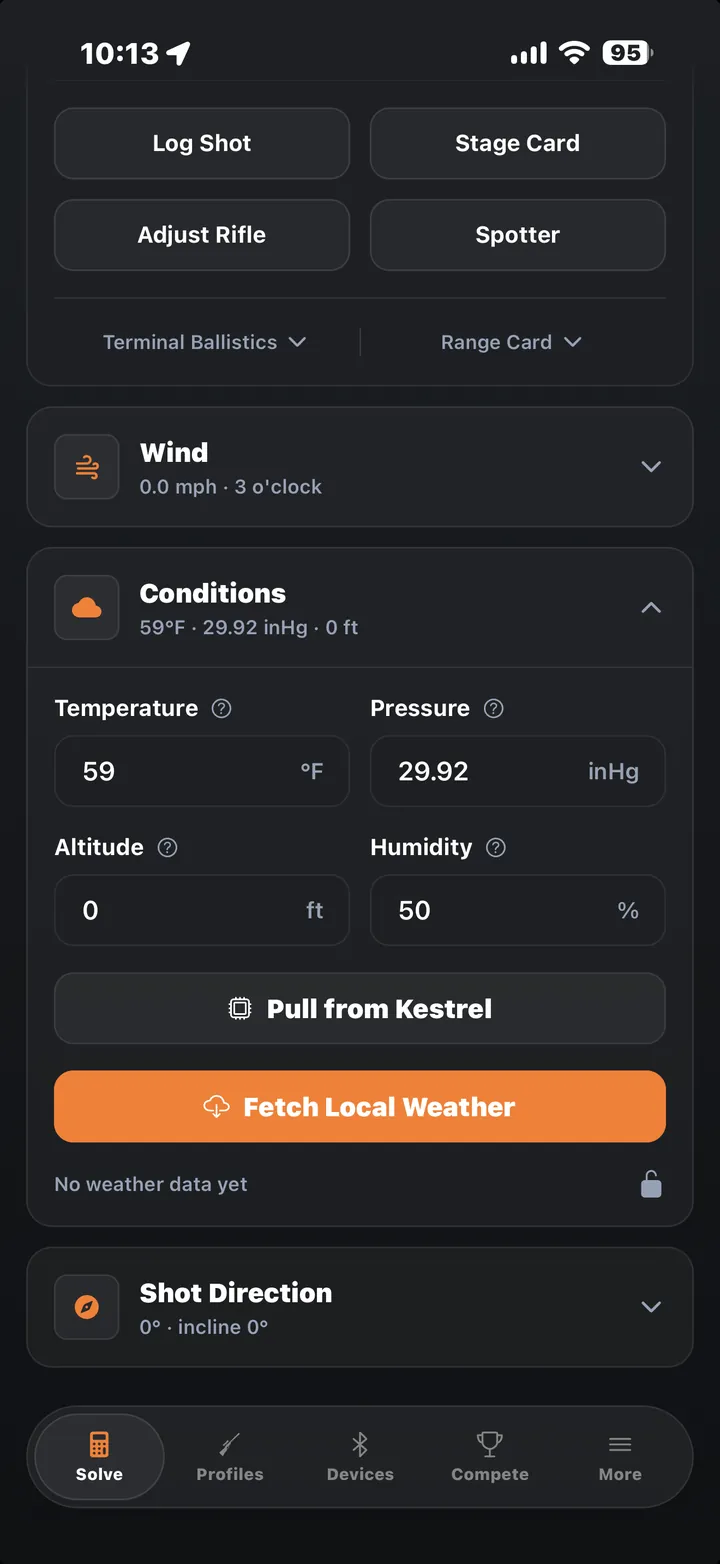
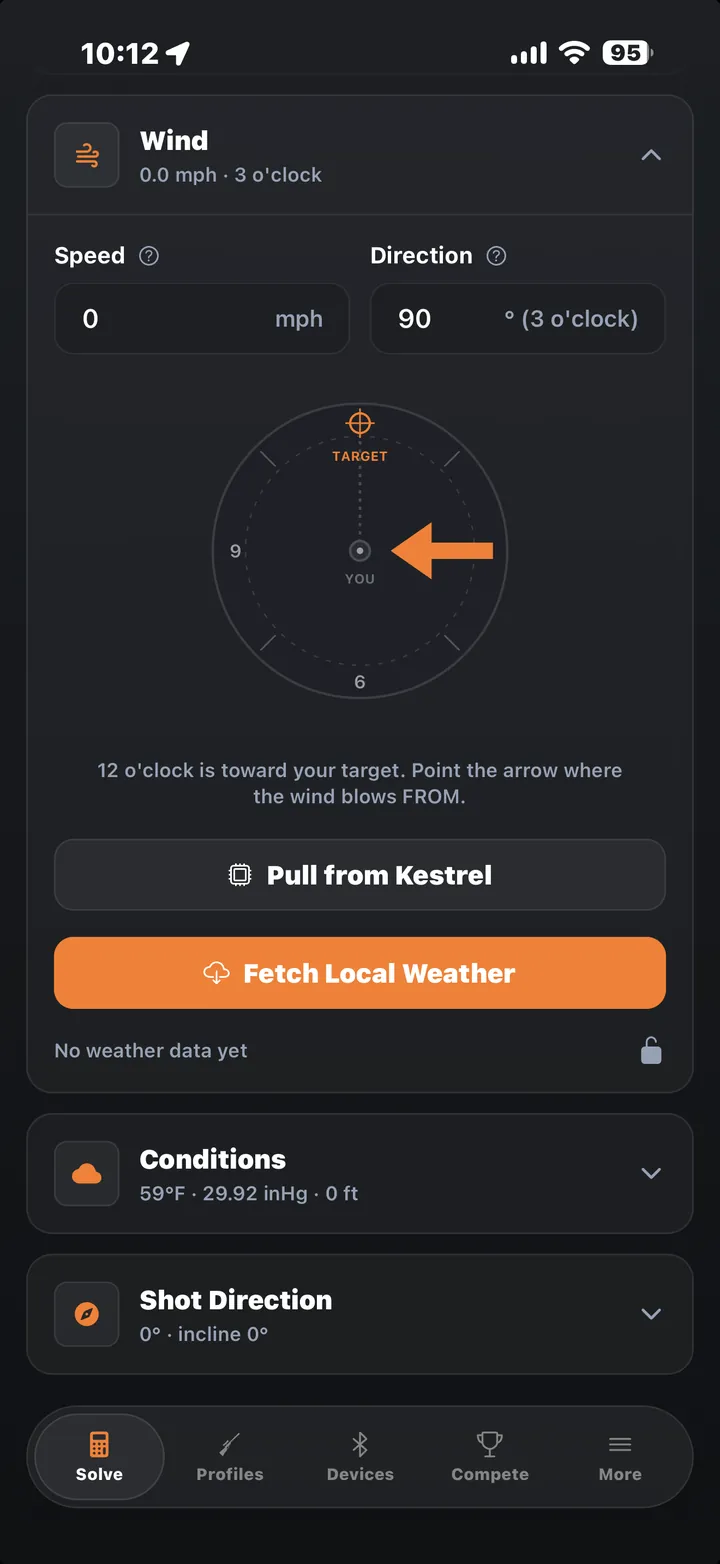
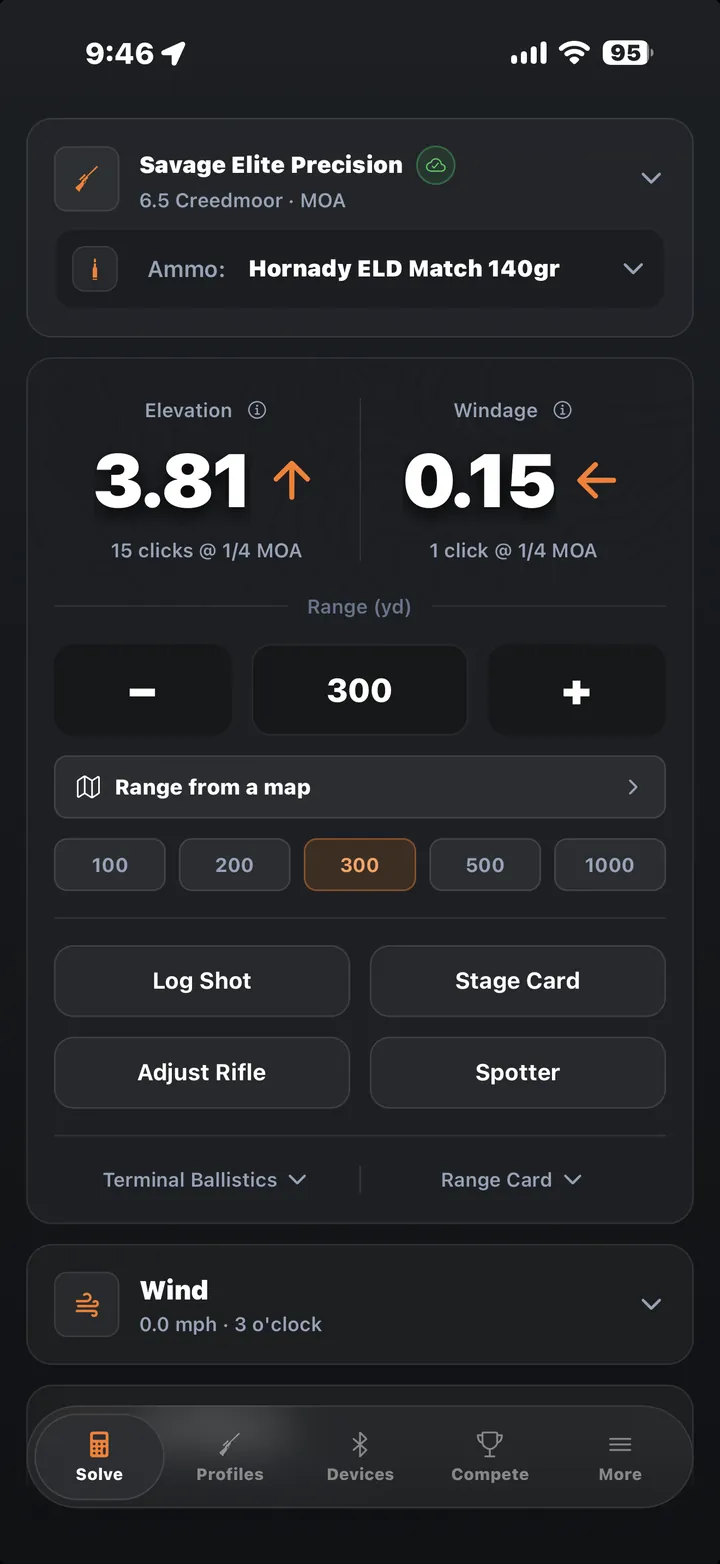
The engine runs a full point-mass trajectory solve using G1 or G7 drag models, whichever matches your bullet, corrected for the atmospheric conditions you give it: temperature, pressure, humidity, altitude, plus wind at whatever angle you dial in.
Above that sits the higher-order work most calculators skip entirely: spin drift from the bullet's own gyroscopic behavior, and the Coriolis effect from the Earth's rotation, both derived from first principles rather than approximated with a flat correction table.
The drag tables themselves are the industry-standard G1/G7 data sets, the same ones ballistic engineers have used for decades. Atlas doesn't invent its own physics. It implements the real ones correctly and lets you see every input that went into the number on screen.
Why it matters
At 300 yards, most engines get you close enough. Past 600 to 800 yards, the difference between an engine that's cutting corners and one that isn't is the difference between a hit and a called shot you can't explain.
Every input Atlas uses is visible to you. There's no black box between what you told it and what it gives back.